Languages & Culture
Cebuano
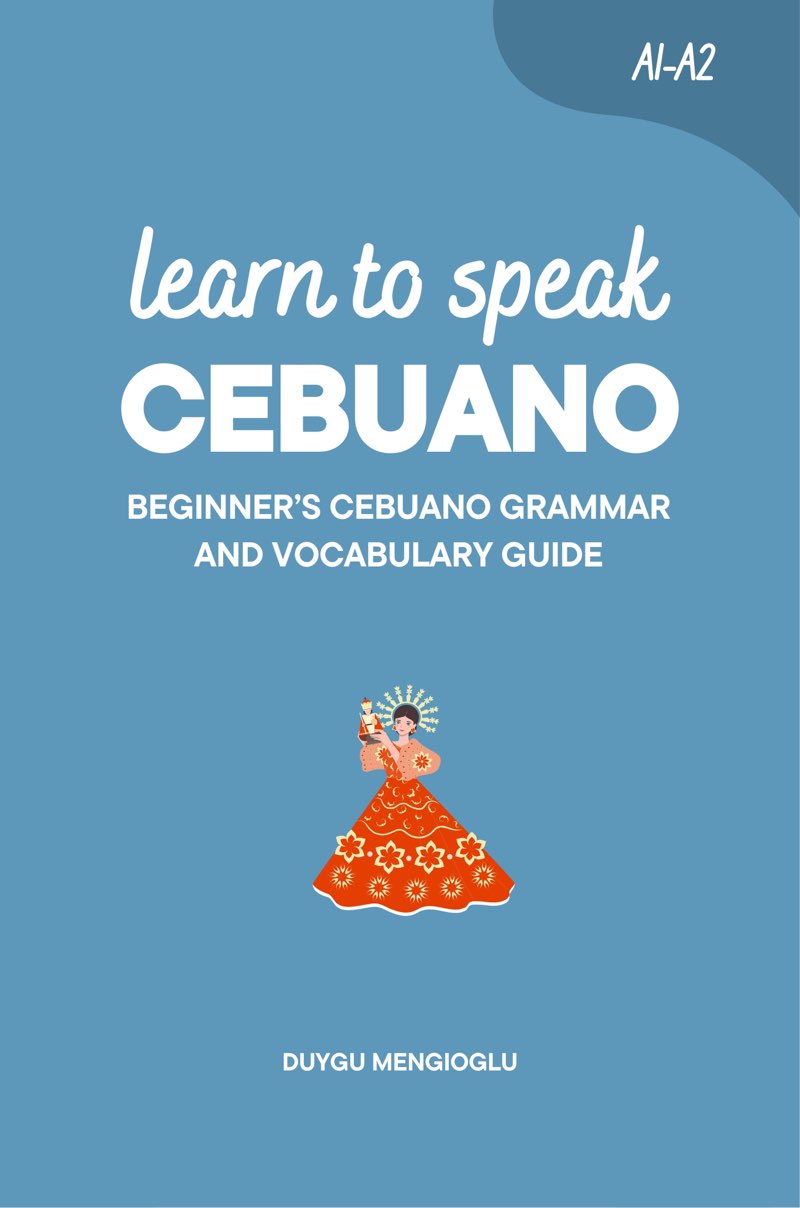
Cebuano has a geography larger than its name might suggest. The Komisyon sa Wikang Filipino, the Philippines’ national language commission, identifies communities using it in Cebu, Bohol, Negros Oriental, Siquijor, parts of Leyte and numerous areas of Mindanao, including Davao, Agusan and Bukidnon. Its users include people from several ethnic communities. Cebuano is an Austronesian language; the commission places it within the Bisayan grouping of Central Philippine languages. Its distribution therefore should not be reduced to the island of Cebu or to one ancestry.
Names require attention to place and context. The commission records Bisaya, Binisaya and Sugbuanon among Cebuano’s alternative names. Yet Bisaya and Binisaya do not always identify Cebuano: the University of the Philippines Diliman’s language presentation also records these names for Aklanon in Aklan. Recognising this shared naming is more useful than insisting that a speaker’s preferred name must be wrong. In this article, “Cebuano” identifies the particular language, while a reference to “Bisaya” elsewhere needs its local context checked.
Reading the historical record carefully
Some early evidence is revealing precisely because it is imperfect. Linguist Jason William Lobel examines the wordlist Antonio Pigafetta collected during the 1521 Magellan expedition. He identifies difficulties with its spelling and the inclusion of Malay forms, so it cannot be treated as a transparent transcription of Cebuano. Lobel also discusses Cebuano material preserved within Francisco Ezguerra’s seventeenth-century grammar of Waray. Historical language research must establish which language a form represents before using it to describe change. An early written record is evidence about an already spoken language, not its date of birth.
By the early twentieth century, newspapers provided a different setting for Cebuano writing. The Cebuano Studies Center’s archive describes Nueva Fuerza as a Spanish–Cebuano newspaper founded in 1915. It was absorbed in 1922 by its Cebuano sister publication, Bag-ong Kusog, which had begun the previous year. The archive organises material into fiction, poetry, drama, biography and essays. This range shows why a newspaper can matter to language history beyond its news reports: it preserves forms of public argument and literary expression alongside one another.
How scholars describe a sentence
Cebuano grammar offers another reason to approach the language on its own terms. Michael Tanangkingsing’s 2009 reference grammar describes it as predicate-initial: the part expressing an action, state or description generally comes before the other main elements. Noun phrases carry markers, while verbs occur with particles and pronouns that contribute to a clause’s organisation. The dissertation also studies connected discourse, including how speakers keep track of participants across clauses. These questions move beyond replacing individual English words with Cebuano equivalents; they concern how a speaker builds an intelligible account.
More recent documentation includes the Cebuano GJA treebank in the Universal Dependencies project. Glyd Jun Arañes manually annotated example sentences drawn from grammars and community-contributed Tatoeba material as part of postgraduate research at the University of Eastern Finland. A treebank records grammatical properties and relationships so that sentence structures can be examined systematically. The project describes this collection as work in progress. Its examples serve a particular research purpose; they should not be mistaken for a comprehensive recording of everyday Cebuano conversation.
Literature as a shared activity
The University of San Carlos’s Cebuano Studies Center connects preservation with opportunities to read. Its 2017 archive-launch report describes digitising early issues of Bag-ong Kusog with support from the National Commission for Culture and the Arts. The report identifies students and scholars as intended users. Preserving a periodical allows later readers to return to the material itself, compare writers and investigate the circumstances of publication, rather than depend entirely on a later summary of literary history.
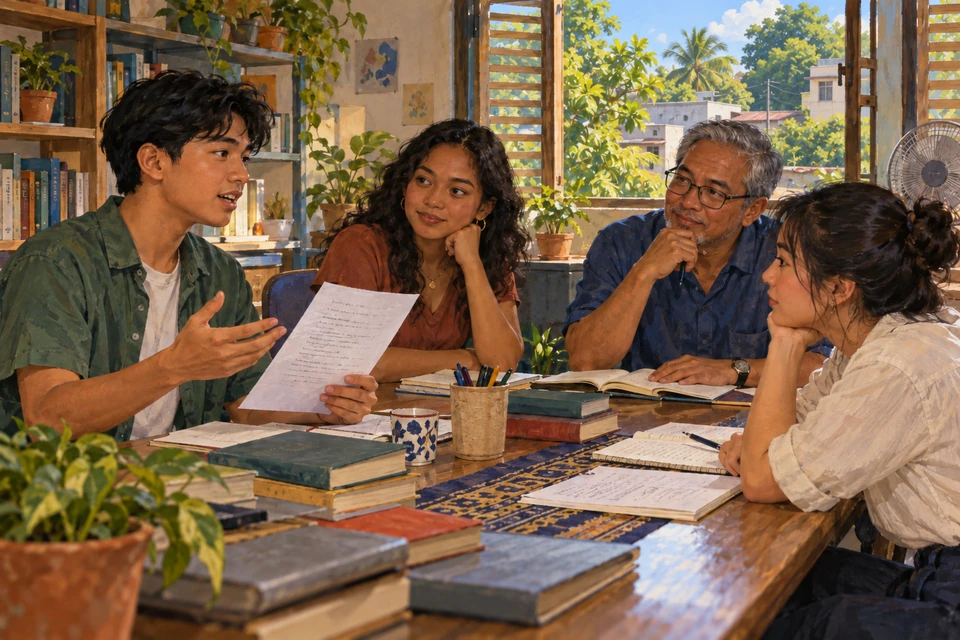
The centre’s announced programme for National Language Month in 2024 provides a more immediate example of literary participation. It brought together plans for discussion of freedom and language, selected Cebuano and Filipino poems, and student performances. It also announced a documentary about Cebuano writer Lamberto Ceballos. These are specific ways a language can be studied and used creatively: reading a poem aloud, debating its ideas and documenting a writer’s work. They also show Cebuano appearing alongside another Philippine language in a shared programme, without the two being treated as interchangeable.
Sources
- Komisyon sa Wikang Filipino, KWF Repositoryo. Sebwáno (2023-12-06). https://kwfwikaatkultura.ph/sebwano-2/
- University of the Philippines Diliman, Sentro ng Wikang Filipino. Tanghal Tagumpay 2024. https://sentrofilipino.upd.edu.ph/gad/30712-2/
- Universal Dependencies; contributor Glyd Jun Arañes (page also lists Glyd Aranes). UD Cebuano GJA. https://universaldependencies.org/treebanks/ceb_gja/index.html
- Jason William Lobel; PhD dissertation, University of Hawai‘i at Mānoa; public copy hosted by linguist R. David Zorc. Philippine and North Bornean Languages: Issues in Description, Subgrouping, and Reconstruction. https://zorc.net/rdzorc/Lobel=JasonLobel/Lobel-DISSERTATION-Revised-2013-0328.pdf
- Nueva Fuerza Online Archive, University of San Carlos Cebuano Studies Center. About. https://archive.cebuanostudiescenter.com/about/
- Michael Tanangkingsing; National Taiwan University repository. A Functional Reference Grammar on Cebuano (2009). https://scholars.lib.ntu.edu.tw/entities/publication/c4a86c27-61b2-4150-8af6-ee83cab16927
- Hope S. Yu, Director, Cebuano Studies Center; University of San Carlos. Cebuano Studies Center launches Nueva Fuerza Online Archive (2017-09-13). https://usc.edu.ph/cebuano-studies-center-launches-nueva-fuerza-online-archive
- Cebuano Studies Center, University of San Carlos; CSC Admin. Buwan ng Pambansang Wika 2024 (2024-08-29). https://www.cebuanostudiescenter.com/buwan-ng-pambansang-wika-2024/
- Cebuano Studies Center, University of San Carlos; CSC Admin. The Carcar Lecture Series (2013-01-18). https://www.cebuanostudiescenter.com/the-carcar-lecture-series/