Languages & Culture
Dominican Spanish

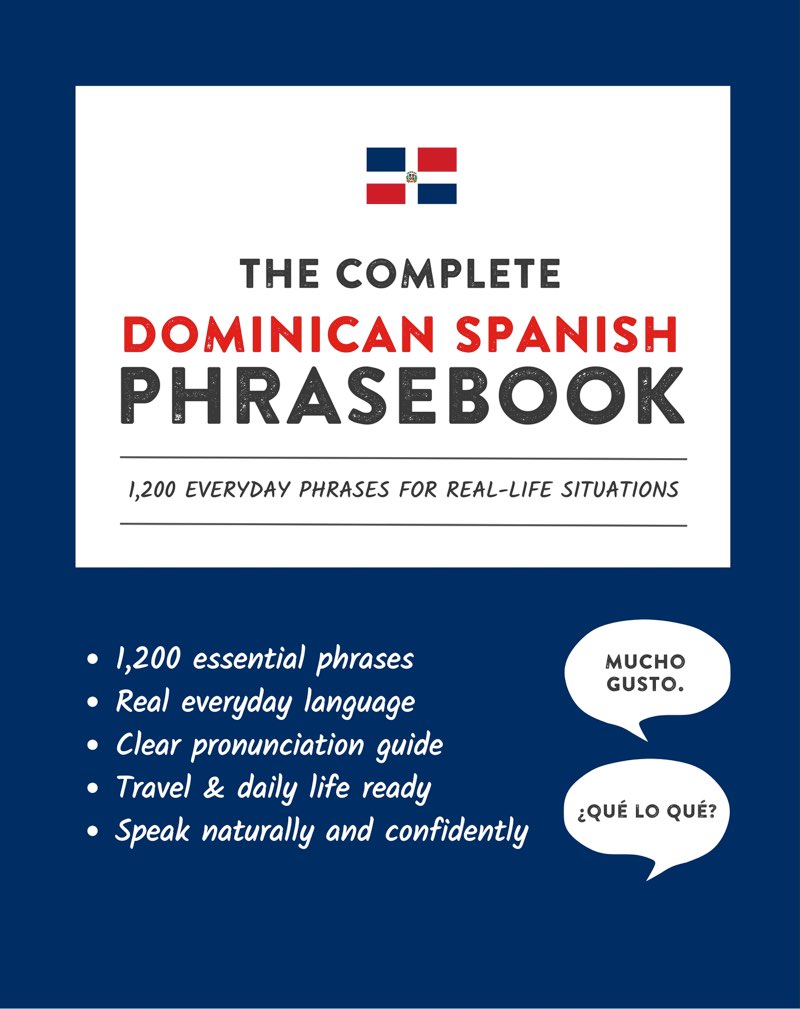
Dominican Spanish encompasses the regional and social varieties of Spanish used in the Dominican Republic and in Dominican communities abroad. Spanish belongs to the Romance family and developed in the Iberian Peninsula. The Dominican label identifies a particular history and range of usages within Spanish; it does not name an independent language or one uniform accent. A useful introduction needs to connect speech with the people who study, record and use it.
Recording and investigating Dominican usage
The documentation of Dominican usage has its own history. IGALEX’s project account traces earlier dictionary work through Rafael Brito in 1930 and Manuel Antonio Patín Maceo in 1940 and 1947. It describes a tension between appreciation of local expression and a purist approach that treated Peninsular Spanish as the reference point. These earlier dictionaries form part of the background to the modern project’s stated aim of recording usage.
Present-day variation is a subject for research, not merely a list of pronunciations to imitate. A May 2026 report from Pontificia Universidad Católica Madre y Maestra describes Romi Román Cabrera's research during a stay at its Santiago campus. Children and adults listened to sentences while looking at pictures; eye tracking helped investigate how they processed language. The project examined questions involving pronouns and the interpretation of plurality when spoken forms weakened or omitted a written s. The report describes research methods and questions, rather than publishing a complete set of results.
This kind of investigation changes the learner's question. Instead of assuming that an unfamiliar form represents a failure to communicate, one can ask how listeners use the available information to understand it. The university also reports workshops connecting the visiting researcher's work with teachers' classroom concerns. That connection makes Dominican speech an object of serious study within Dominican educational institutions, alongside its use in everyday life.
How a dictionary gathers evidence
The Diccionario del español dominicano, first published in November 2013, takes a deliberately selective approach. Its project account explains that it records words and meanings characteristic of Dominican usage that are not common throughout general Spanish. It includes both current vocabulary and words disappearing as generations and ways of life change. A reader therefore should not expect it to list every ordinary Spanish word used in the country. Its purpose is to make particular usages visible within the shared language.
Historical comparison is also the purpose of IGALEX’s Tesoro léxico del español dominicano project. Its description sets out a design in which evidence from earlier lexical and dictionary sources is arranged chronologically, with an identifier showing where each record came from. The aim is to trace the documentation and changing meanings of distinctive Dominican vocabulary. This is a project account, not proof that every proposed entry is complete. It also concerns written documentation: an early dictionary record cannot, by itself, establish when speakers first began using a word.
Stories carried between places
Public oral histories provide another kind of evidence. Guttman Community College's Voices from the Heart of Gotham brings together student-designed interviews about New York communities. Its catalogue includes Spanish-language interviews with people from the Dominican Republic living in the Bronx, alongside interviews conducted in English and other languages. The records identify interview dates, neighbourhoods and language choices. They offer particular speakers' accounts, without making birthplace a guarantee of one language or accent.
One transcript records Elsy Rosario interviewing Rafael Rosario in the Bronx on 12 October 2019. He recalls growing up in San Víctor, Moca, and remembers his mother's cooking and visits from relatives. Rice, beans and stewed meat connect childhood preferences with meals he still enjoys; sancocho recalls family gatherings. These details belong to his account, rather than a prescription for what every Dominican family eats. Reading the conversation shows how ordinary questions can preserve memories, relationships and expressions of belonging.
New writing creates further connections. Dominican Writers' public notice for a July 2023 workshop in New York announced Spanish-language sessions on shaping stories for readers, with opportunities to submit work to its Cuenticos anthology project. The notice documents an invitation and its aims, not verified attendance or publication outcomes. Together, dictionary research, oral-history transcripts and community writing programmes show several ways to approach Dominican Spanish: through evidence of usage, through individual experience and through the work of creating something new for other people to read.
Sources
- Center for Language Technology, Indiana University. Spanish. https://celt.indiana.edu/portal/Spanish/index.html
- Instituto Guzmán Ariza de Lexicografía (IGALEX). Diccionario del español dominicano. https://igalex.org/diccionario-del-espanol-dominicano/
- Pontificia Universidad Católica Madre y Maestra (PUCMM), institutional press report. Investigadora de Penn State analiza el habla dominicana mediante tecnología de seguimiento ocular (2026-05-29). https://prensa.pucmm.edu.do/investigacion/2026/05/29/investigadora-de-penn-state-analiza-el-habla-dominicana-mediante-tecnologia-de-seguimiento-ocular/
- Guttman Community College, CUNY. Voices from the Heart of Gotham. https://guttman.cuny.edu/library/voices-from-the-heart-of-gotham/
- Elsy Rosario, interviewer; Rafael Rosario, narrator; Guttman Community College oral-history collection. Rafael Rosario entrevistado por Elsy Rosario. https://guttman.cuny.edu/oral-histories/Rafael%20Rosario%20Food%20Transcript.pdf
- Dominican Writers Association. Cambiemos la narrativa: aprendamos a redactar nuestras historias para conectar con el lector. https://www.dominicanwriters.org/event-info/cambiemos-la-narrativa-aprendamos-a-redactar-nuestras-historias-para-conectar-con-el-lector
- Instituto Guzmán Ariza de Lexicografía (IGALEX). Tesoro léxico del español dominicano. https://igalex.org/tesoro-lexico-del-espanol-dominicano/