Languages & Culture
Hausa

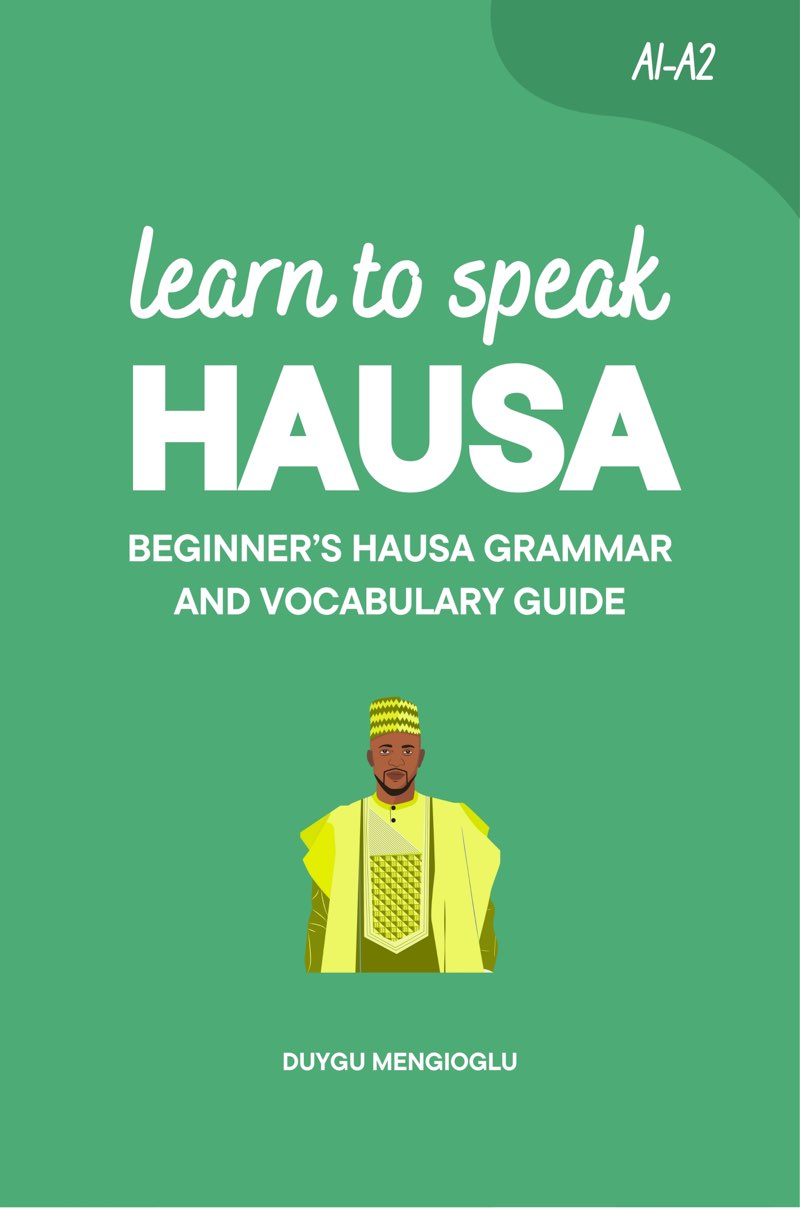
Hausa connects regional communities with a much wider network of readers, listeners and additional-language speakers. Its longstanding centres include northern Nigeria and neighbouring Niger, while its use in trade extends across parts of West and Central Africa. Linguistically it belongs to the Chadic branch of the Afroasiatic family; Paul Newman places it more specifically in West-A Chadic. Language affiliation, everyday language use and ethnic identity answer different questions. A language that circulates beyond its home communities cannot serve as a reliable shorthand for everybody’s ancestry or religion.
Regional speech and a shared written standard
Kano-associated Hausa has particular prominence in print and broadcasting, but it does not exhaust the language. UCLA’s teaching resources distinguish western varieties around Sokoto and extending into Niger, northern varieties around places such as Katsina and Maradi, and southern and eastern varieties. They also discuss Hausa in Ghana. These regional groupings contain variation within them. For a learner, the practical lesson is to ask where a recording or teaching model comes from: a widely circulated standard provides a useful reference without making other speakers’ forms defective.
Two writing traditions, many purposes
Hausa has been written in an adapted Arabic script, generally called Ajami, since at least the eighteenth century. Boston University’s Ajami project describes its importance in nineteenth-century religious instruction, including the work of Usman ɗan Fodio and his daughter Nana Asma’u. Latin-script writing developed along a different historical route involving European travellers, missionaries and colonial institutions. Neither script determines the language’s family: Hausa written in Arabic-derived letters remains a Chadic language. The project also documents religious and secular uses of this writing tradition, making a simple division between an exclusively religious script and an exclusively everyday one misleading.
Manuscripts become more useful when readers can connect their visible marks with language and context. The Boston University Hausa Ajami Reader introduces material digitised through fieldwork in Hausa communities in Nigeria. Its published description explains that manuscript images are accompanied by Latin-script transcriptions, English translations, glossaries, notes and learning exercises, with additional information about authors and discussants. These are different kinds of assistance: a transcription helps identify a written form, while a translation helps interpret its meaning. Neither removes the need to understand the setting in which the document was made.
Research that serves working readers
Bayero University in Kano traces its language research centre to 1969/70 and the earlier Hausa Language Board. The centre’s account includes lexicography, translation and the production of Hausa science textbooks. That range matters because language scholarship also supplies tools for subjects beyond literature. Translating a scientific explanation or preparing a classroom text raises practical questions about terminology, clarity and the audience’s existing knowledge. Hausa is being used as a medium for explaining other things as well as being studied in its own right.
A more recent publication illustrates institutional cooperation in this work. Bayero University reports that BUK Press’s Hausa-English Bilingual Dictionary, by Paul Newman and Roxana Ma Newman, was launched on 5 February 2022. Its report identifies teachers, learners and journalists among the intended users. The launch establishes a dated publishing milestone; it does not, by itself, tell us how completely any dictionary represents all regional speech or every specialised field. Those questions require examination of the dictionary itself.
Paperback fiction and linguistic inquiry
Popular fiction also belongs in an account of Hausa intellectual life. In his 2018 inaugural lecture at Bayero University, Isa Mukhtar discusses women writers associated with Kano Market Literature, including Hafsatu Abdulwaheed and Zuwaira Isa. His survey goes beyond romance to themes of morality, feminism and crime. These books provide a specific literary setting in which questions about relationships and social expectations can be explored through fictional characters.
Mukhtar’s own research examines how grammatical choices in Hausa prose help construct a writer’s perspective. His approach connects language analysis with literary interpretation: how a story is worded contributes to what it communicates. Together, manuscripts, dictionaries, textbooks and fiction show why an introduction to Hausa should make room for both everyday communication and the varied work of its writers and researchers.
Sources
- Paul Newman; Cambridge University Press. The Hausa Language. https://www.cambridge.org/core/books/abs/history-of-the-hausa-language/hausa-language/429242C221AFBA1D927AF6DA2B677CD9
- Language Institute, University of Wisconsin–Madison. Hausa. https://languages.wisc.edu/languages/hausa/
- African Languages at UCLA. Hausa Language Variation and Dialects. https://aflang.humanities.ucla.edu/language-materials/chadic-languages/hausa/hausa-language-variation-dialects/
- NEH Ajami Research Project, African Studies Center, Boston University. Hausa. https://sites.bu.edu/nehajami/the-four-languages/hausa/
- Readers in Ajami, African Studies Center, Boston University. Hausa Ajami Reader. https://sites.bu.edu/ria/hausa/hausa-ajami-reader/
- Centre for Research in Nigerian Languages, Translation and Folklore, Bayero University, Kano. ABOUT US. https://www.centres.buk.edu.ng/cnl_About_Us
- Professor Isa Mukhtar; Department of Nigerian Languages, Bayero University, Kano. Stylistic Theories and the Linguistics of Hausa Prose Texts: The Systemic Functional Linguistics (SFL) Approach. https://www.buk.edu.ng/sites/default/files/oer/Inaugural_lecture/26_inaugural_lecture.pdf
- Bayero University; institutional news account. Dantata Launches Hausa-English Bilingual Dictionary Published by BUK. https://buk.edu.ng/node/274