Languages & Culture
Italian
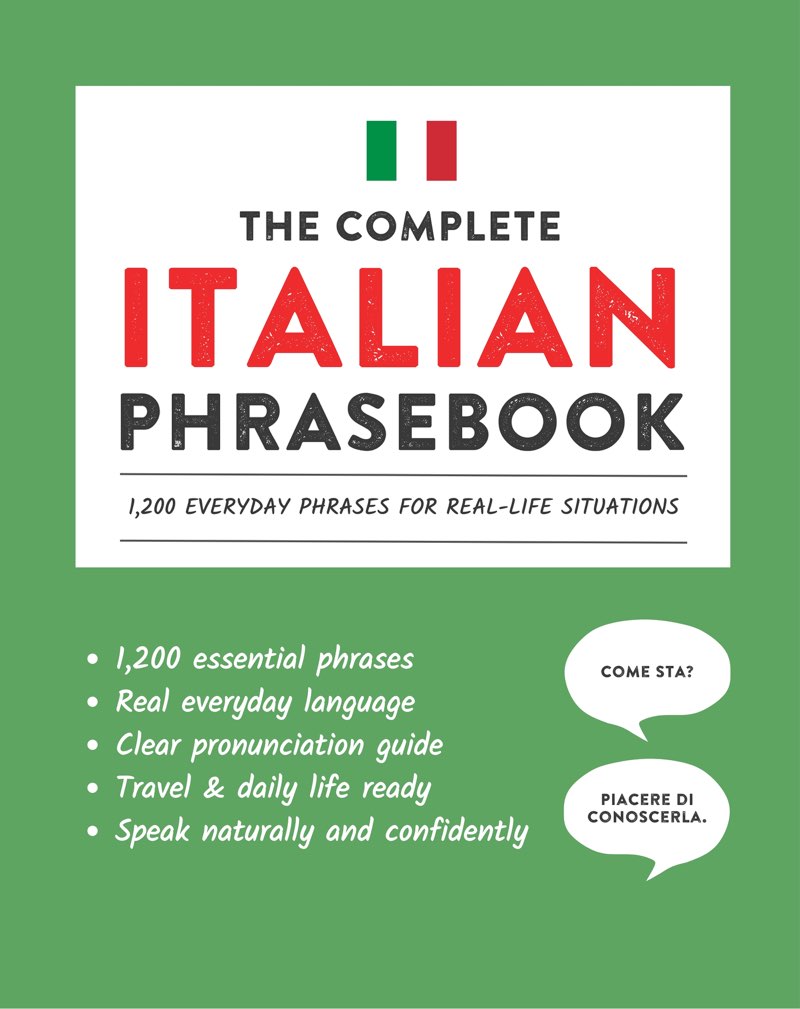
Italian is a Romance language used in Italy and beyond its borders, including Switzerland and communities in the Americas and Australia. Its modern standard has a particular history, rooted in the prestige of Florentine writing. Yet an account of Italian also needs to distinguish regional ways of speaking Italian from the other linguistic systems traditionally called dialects in Italy. Those categories describe different relationships to the standard; they cannot be understood simply as degrees of correctness.
A literary standard before a unified state
The historian of Italian Maurizio Vitale explains that the rise of Florentine depended on cultural and literary circumstances before Italy became a unified state. Dante, Petrarch and Boccaccio supplied influential models that writers elsewhere admired and imitated. His account rejects the idea that one local language possessed inherently superior capacities for national use. Florentine’s success tells us about the authority of literature and its readers, rather than a linguistic competition with a naturally inevitable winner.
Rita Librandi identifies a decisive step in codification: in 1525 Pietro Bembo recommended Boccaccio as a model for prose and Petrarch for poetry. This helped establish a shared literary norm based on fourteenth-century Florentine. Living Florentine continued to change, however, while the standard followed its own history. Present-day speech in Florence therefore cannot simply be equated with standard Italian. Knowing this separates the historical source of a standard from the contemporary speech of the place associated with it.
Local speech and Italian beyond Italy
The word dialect needs similar care. Librandi explains that Italy’s traditional local dialects are linguistic systems whose restricted geographical distribution and domains of use distinguish them socially from the national language. Their literary reputations vary, but a celebrated literature is not what makes a form of speech a language. The lesson for readers is to identify what a source means by dialect: a local system such as Sicilian or Venetian, or a regional variety of Italian. Treating every local form as an imperfect attempt at the standard obscures those histories.
Switzerland provides another perspective on Italian’s present geography. The Swiss federal authorities identify Italian with Ticino and the southern valleys of Graubünden, including Mesolcina, Calanca, Bregaglia and Poschiavo. They describe Swiss Italian as shaped by local Lombard dialects, other Swiss national languages and regional circumstances. This setting places Italian within a multilingual national society and reminds readers that Italian-speaking life extends beyond the institutions and borders of Italy.
Dictionaries and recordings reveal different histories
The National Research Council’s Tesoro della Lingua Italiana delle Origini, usually abbreviated TLIO, investigates early written evidence up to around 1400. Its method includes different geographical varieties on equal terms, bringing together Tuscan material and texts from places such as Lombardy, the Veneto and Sicily. Entries show meanings, forms, etymological information and dated examples. The oldest example in a corpus is evidence of surviving documentation; it should not automatically be treated as the moment when someone first used a word.
Research on spoken Italian uses different evidence. KIParla brings together transcribed recordings from varied speakers and communicative settings, with transcripts aligned to audio. The University of Bologna describes modules covering university interactions in Bologna and Turin, interviews with people of differing social backgrounds, and conversations at meals recorded across multiple Italian regions. These collections let researchers relate a form of speech to who was speaking and what they were doing. A university examination and a conversation over lunch are distinct situations, even when both belong to the study of Italian.
Reading as a shared activity
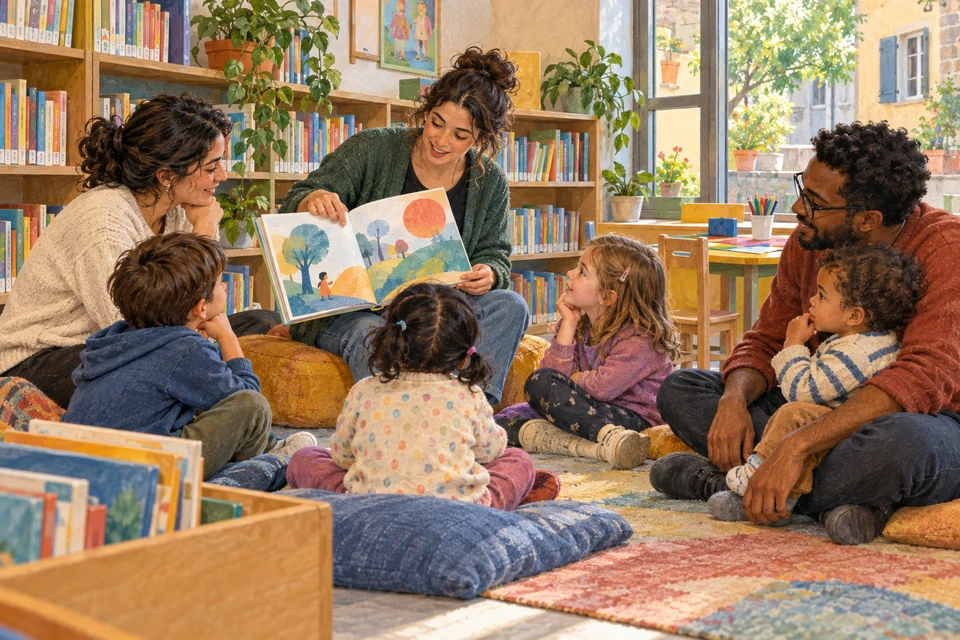
Italian also circulates through modest local cultural activities. In Serramazzoni, the municipal library works with volunteers from Nati per Leggere to offer reading and play activities for families with young children. The municipality also describes sessions devoted to creativity. This is one specific example of how books become occasions for conversation between children and adults. It belongs alongside the literary works, dictionaries and recorded exchanges in an account of the language: reading can involve a community room and a shared picture book as well as an individual studying an established classic.
Sources
- Indiana University, Center for Language Technology. Italian. https://celt.indiana.edu/portal/Italian/index.html
- Maurizio Vitale; Accademia della Crusca. Lingua nazionale: le ragioni del fiorentino. https://accademiadellacrusca.it/it/consulenza/lingua-nazionale-le-ragioni-del-fiorentino/306
- Rita Librandi; Accademia della Crusca. I luoghi comuni sulla lingua sono duri a morire: meglio però sarebbe non insegnarli alla RAI (2017-06-01). https://accademiadellacrusca.it/it/contenuti/titolo/7412
- Presence Switzerland, Federal Department of Foreign Affairs, Swiss federal authorities. Languages and dialects (2024-06-26). https://www.aboutswitzerland.eda.admin.ch/en/languages-and-dialects
- Consiglio Nazionale delle Ricerche, Opera del Vocabolario Italiano. The TLIO (Tesoro della Lingua Italiana delle Origini) and its New Interface. https://www.cnr.it/en/focus/062-5/the-tlio-tesoro-della-lingua-italiana-delle-origini-and-its-new-interface
- KIParla project. KIParla Corpus – Spoken Italian and Italian speakers. https://kiparla.it/en/
- Università di Bologna, Laboratorio di Linguistica Sperimentale R. Carati. RISORSE LINGUISTICHE. https://site.unibo.it/llis/it/risorse-linguistiche
- Comune di Serramazzoni. Letture per bambini in biblioteca – N.P.L. Nati Per Leggere.. https://www.comune.serramazzoni.mo.it/servizio/letture-per-bambini-in-biblioteca-n-p-l-nati-per-leggere/