Languages & Culture
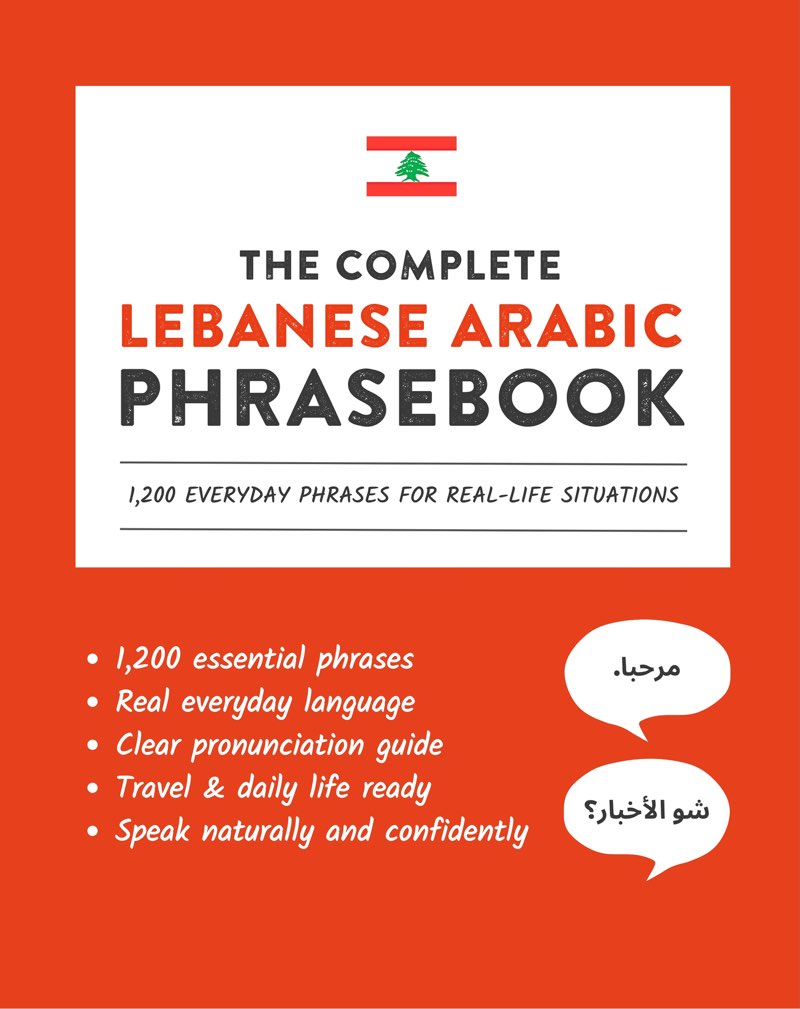
Lebanese Arabic

Lebanese Arabic names regional spoken varieties within Levantine Arabic, closely connected to neighbouring Syrian, Palestinian and Jordanian varieties. The label is useful for studying language in Lebanon, but it does not describe an identical accent shared by every resident. Inalco's language overview places historically sedentary Lebanese and Syrian varieties within the wider Levantine grouping and warns against turning national population totals into speaker counts.
Arabic history and everyday repertoires
Through Arabic, Lebanese varieties belong to the Semitic family. Their history includes Arabic's expansion in the Levant from the seventh century onward in a region where Aramaic was widely spoken. Contact is part of that history, but a broad historical relationship does not establish the origin of every modern expression. Lebanese Arabic also has its own grammar, with patterns of word formation and sentence construction that deserve study on their own terms.
The relationship with Modern Standard Arabic is often described through diglossia: different varieties have different social functions, with the standard especially prominent in education and formal settings. This is not a simple division between writing and speech. The American University of Beirut's Lebanese Arabic programme uses text and video materials, songs and television or internet series. Its advanced course explicitly addresses movement between Lebanese and Standard Arabic and the contexts of their use. For a learner, recognising the audience and situation is part of understanding what a speaker is doing.
Hearing difference within a shared city
Beirut provides evidence of interaction among varieties rather than a single national speech model. Yasmine Abou Taha and Stephen Levey's 2024 study compared Lebanese and Palestinian Arabic using interviews collected in the city during 2016–2019, alongside older material. It found evidence of convergence in selected pronunciation and negation features, but less convincing evidence for convergence in the expression of future time. The authors also acknowledge limits in their sample, including its emphasis on educated younger speakers. These findings concern particular features and participants, not the disappearance of Palestinian linguistic identity.
Language attitudes are another part of the picture. In a 2026 study, Tamara Sleiman, Rosine Zgheib and Nadine Riachi Haddad interviewed older and younger people in Beirut about dialect and the legacies of civil war. Their published abstract describes continuing judgments about belonging, including mockery and adaptation. Such research shows why listeners' assumptions about an accent require scrutiny. An accent is not a dependable shortcut to someone's beliefs or personal history.
Poetry that answers back
One distinctive cultural use of the vernacular is zajal, recited or sung folk poetry. UNESCO's account describes its place in family and social celebrations and in daily life. In poetic contests, performers exchange verses and challenges before an audience, accompanied by percussion. The practice received inscription on UNESCO's Representative List in 2014. Its interest for a language learner lies partly in this responsive form: words acquire their force through delivery, the preceding contribution and the listening audience.
Performance has also interacted with publishing. The Holy Spirit University of Kaslik's Phoenix Center presents the 2014 publication Zajal in the Journal, with a study by Joseph Abi Daher. Its description traces the circulation of printed compositions and recordings in the twentieth century and the emergence of specialist magazines that reached readers in Lebanon and abroad. That history places vernacular poetry in an evolving media environment. Oral composition and print have supported one another rather than occupying sealed cultural worlds.
Making vernacular language searchable
The Baladi corpus brings another set of materials into research. Presented in 2022 by collaborators at Strasbourg, Birzeit and the American University of Beirut, it draws on Lebanese poems, blog posts and satirical social-media writing. Researchers manually marked grammatical information, including word stems, affixes and parts of speech, and coordinated the resource with the Palestinian Curras corpus. The selected sources are valuable evidence of written vernacular usage, while their selection also sets limits on what the corpus represents. Poems, conversations and online satire offer different views of Lebanese Arabic; studying their contexts helps preserve those differences.
Sources
- Institut national des langues et civilisations orientales (Inalco). Syrian-Lebanese Arabic. https://www.inalco.fr/en/languages/syrian-lebanese-arabic
- Karim El Haff, Mustafa Jarrar, Tymaa Hammouda and Fadi Zaraket; University of Strasbourg, Birzeit University and American University of Beirut; Proceedings of LREC 2022, 769–778. Curras + Baladi: Towards a Levantine Corpus. https://aclanthology.org/2022.lrec-1.82.pdf
- American University of Beirut, Center for Arab and Middle Eastern Studies (CAMES). Colloquial Lebanese Arabic Program. https://www.aub.edu.lb/fas/cames/sap/Pages/Colloquial-Lebanese-Arabic.aspx
- Yasmine Abou Taha and Stephen Levey; Canadian Journal of Linguistics/Revue canadienne de linguistique 69(2), 203–234. Assessing contact-induced change in Palestinian Arabic: Evidence from Beirut. https://www.cambridge.org/core/journals/canadian-journal-of-linguistics-revue-canadienne-de-linguistique/article/assessing-contactinduced-change-in-palestinian-arabic-evidence-from-beirut/26210037E40ED06713CA7DDEA8D65DB3
- UNESCO. Eleven elements inscribed on Representative List of the Intangible Cultural Heritage. https://www.unesco.org/en/articles/eleven-elements-inscribed-representative-list-intangible-cultural-heritage
- Phoenix Center for Lebanese Studies, Holy Spirit University of Kaslik (USEK); publication by Youssef Bchara El-Bahout, study and presentation by Joseph Abi Daher. Zajal in the Journal. https://www.usek.edu.lb/phoenix/publications/zajal-in-the-journal
- Tamara Sleiman, Rosine Zgheib and Nadine Riachi Haddad; Saint Joseph University of Beirut; Al-Kīmiyā 27, 199–209. Dialect as shibboleth across generations in post-civil war Beirut (2026-01-15). https://journals.usj.edu.lb/al-kimiya/article/view/1629