Languages & Culture
Louisiana Creole
Louisiana Creole, also called Kouri-Vini, is a French-lexified creole language with a history rooted in Louisiana. “French-lexified” identifies its principal vocabulary source; it does not make the language interchangeable with French. The community organisation Chinbo explains that Kouri-Vini is a name used by some speakers and explicitly rejects the idea that it is merely incorrect French. Its discussion also separates language from identity: Louisiana Creole culture includes people of different ethnicities and appearances. A language label cannot tell us somebody’s race, and a person’s appearance cannot tell us which language they speak. The APiCS linguistic survey identifies French as the major lexifier.
Names that need care
Cajun French and Louisiana Creole should not be treated as alternative names for the same thing. Louisiana State University’s explanation of Cajun French identifies it as a variety of French and distinguishes it from Creole. Yet the same account stresses overlapping vocabulary and grammar, variation between communities, and a continuum shaped by contact. These are useful qualifications: a linguistic distinction need not imply that speakers inhabit separate social worlds. “Louisiana French” is therefore not a substitute for “Louisiana Creole,” while rigid assumptions based on the words Cajun or Creole can conceal how people actually speak.
A language formed in Louisiana
The Atchafalaya National Heritage Area’s language account places Kouri-Vini’s formation among enslaved communities during the early eighteenth-century French colonial period. Enslaved Africans and their descendants were central to the language’s formation. The account describes the language becoming a means of communication across racial and legal divisions, used by both enslaved and free people in some regions.
Connections with the Caribbean matter, but they should not erase local development. In their APiCS survey, Thomas A. Klingler and Ingrid Neumann-Holzschuh explain that evidence for a creole in Louisiana predates the major arrival of refugees from Saint-Domingue in 1809–1810. They therefore consider it unlikely that Louisiana Creole was simply imported as Haitian Creole during that migration. The language’s history involves local development alongside subsequent contact, migration and change.
Communities and the limits of counting
Chinbo’s community resource page identifies continuing connections to parishes including St. Martin, St. Landry, Iberia and Pointe Coupée. The authors of *Ti Liv Kréyòl* also locate the language in Louisiana and diaspora communities in Texas, California and Illinois. Their introduction emphasises internal variation and the history of multilingual speakers. No single locality or teaching variety can stand for every family’s speech.
A precise contemporary speaker total would imply more certainty than the evidence allows. The APiCS survey explicitly describes its estimate as impressionistic and says reliable figures are unavailable. This article therefore gives no current count. Counting first-language speakers, people who understand family conversations, and adults learning the language would also answer different questions; these categories should not be silently combined.
Documentation that preserves conversation
Language scholarship offers more than vocabulary lists.
- Thomas Klingler’s 2003 study, If I Could Turn My Tongue Like That: The Creole Language of Pointe Coupee Parish, Louisiana, examines a particular regional variety.
- According to the LSU Press description, its grammatical analysis draws on roughly 150 hours of interviews.
The volume includes transcribed folktales and conversations with residents, accompanied by English translations. That combination makes everyday interaction and storytelling part of the documentary record, alongside formal grammatical analysis.
Learning as contemporary community work
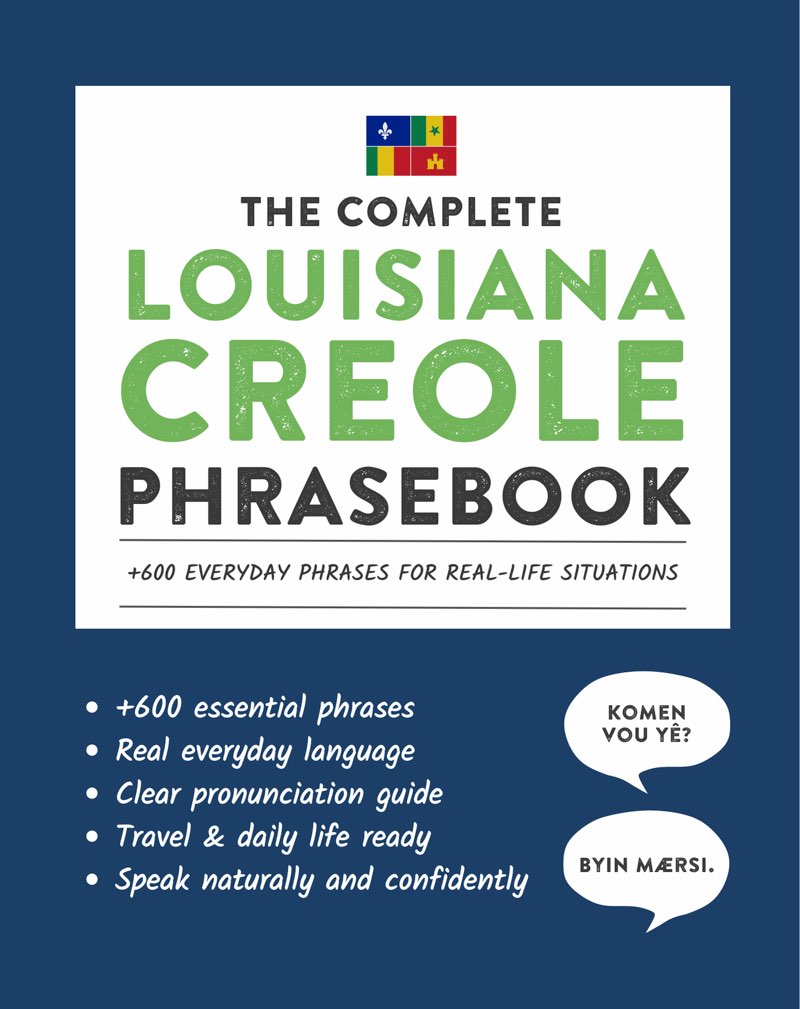
The second edition of *Ti Liv Kréyòl*, published in 2020, shows how documentation can feed new learning. Adrien Guillory-Chatman, Oliver Mayeux, Nathan Wendte and Herbert Wiltz combined teaching experience, linguistic research and community feedback. The introduction describes dialogue recordings, a grammar sketch and a revised lexicon, with illustrations by Louisiana Creole artist Jonathan Mayers. It also acknowledges a practical limitation: the primer presents one teaching variety and cannot cover every form of the language. Learners can use that consistency while remaining attentive to local differences.
Teaching also happens in shared physical spaces. The West Baton Rouge Museum’s listing for Kamp Kréyol advertised a five-day programme for 1–5 June 2026 in Port Allen, with morning immersion lessons and afternoon contributions from cultural bearers, artists, writers and researchers. Its combination of language and cultural work illustrates what reclamation can involve beyond an individual course or dictionary.
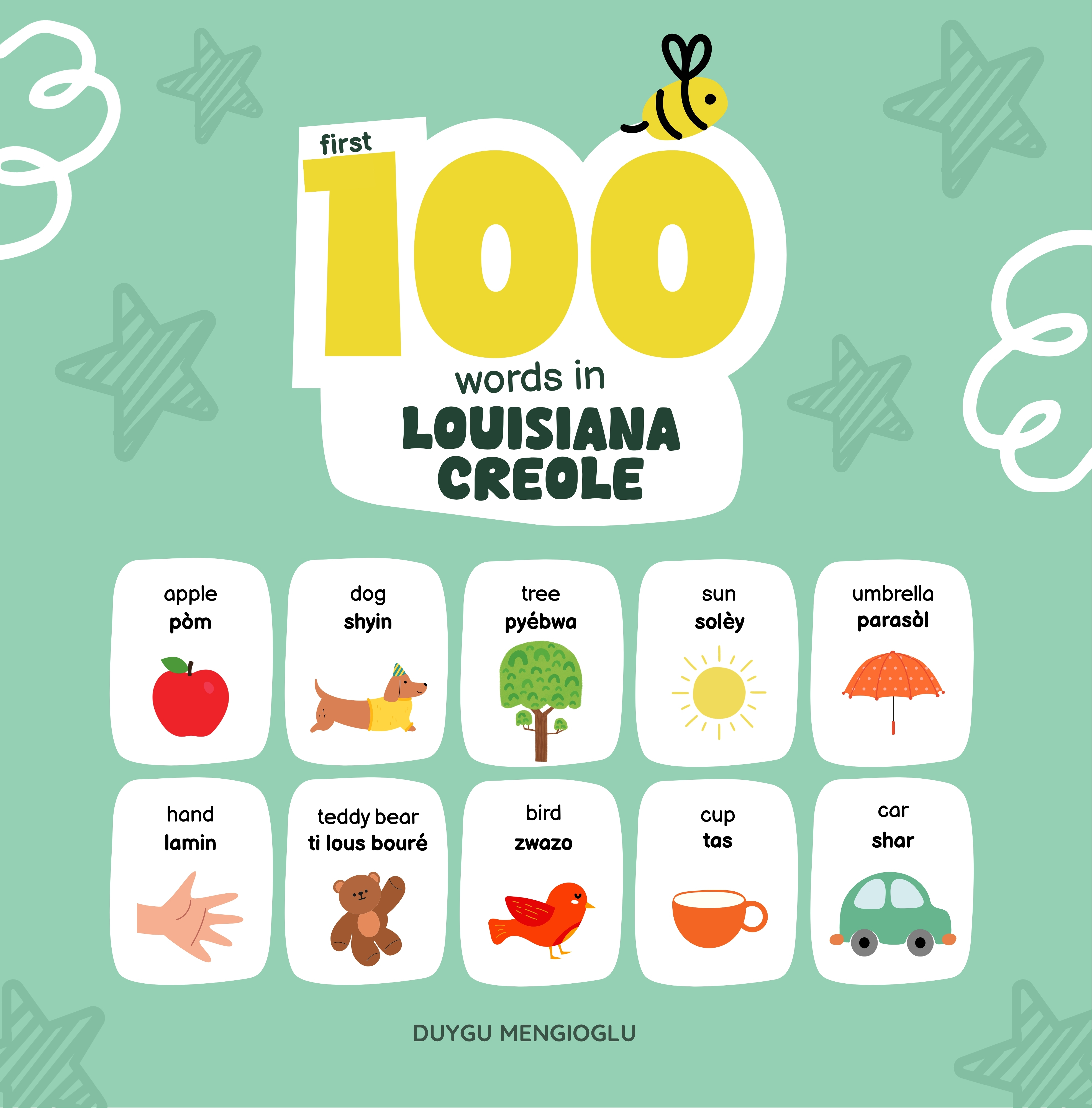
For a small, directly sourced starting point, C.R.E.O.L.E., Inc.’s introductory greetings lesson gives Bon matin as “Good morning” and Bonswa as “Good evening.” Both belong to the lesson’s greeting context and retain its spelling. The same resource discusses flexibility in evening and nighttime usage—a reminder that learning words is also learning when, where and with whom people use them.
Sources
- Aprenn. https://www.chinbo.org/en/aprenn/
- Survey chapter: Louisiana Creole. https://apics-online.info/surveys/53
- Cajun French at LSU. https://www.lsu.edu/hss/french/undergraduate_program/cajun_french/what_is_cajun.php
- Language. https://www.atchafalaya.org/language
- If I Could Turn My Tongue Like That. https://lsupress.org/9780807188774/if-i-could-turn-my-tongue-like-that/
- Ti Liv Kréyòl - Introduction. https://sites.google.com/view/learnlouisianacreole/introduction
- Kamp Kréyol. https://www.wbrparish.org/1102/Kamp-Kryol
- Greetings. https://www.creoleinc.net/learncreole/greetings