Languages & Culture
Miami-Illinois Language
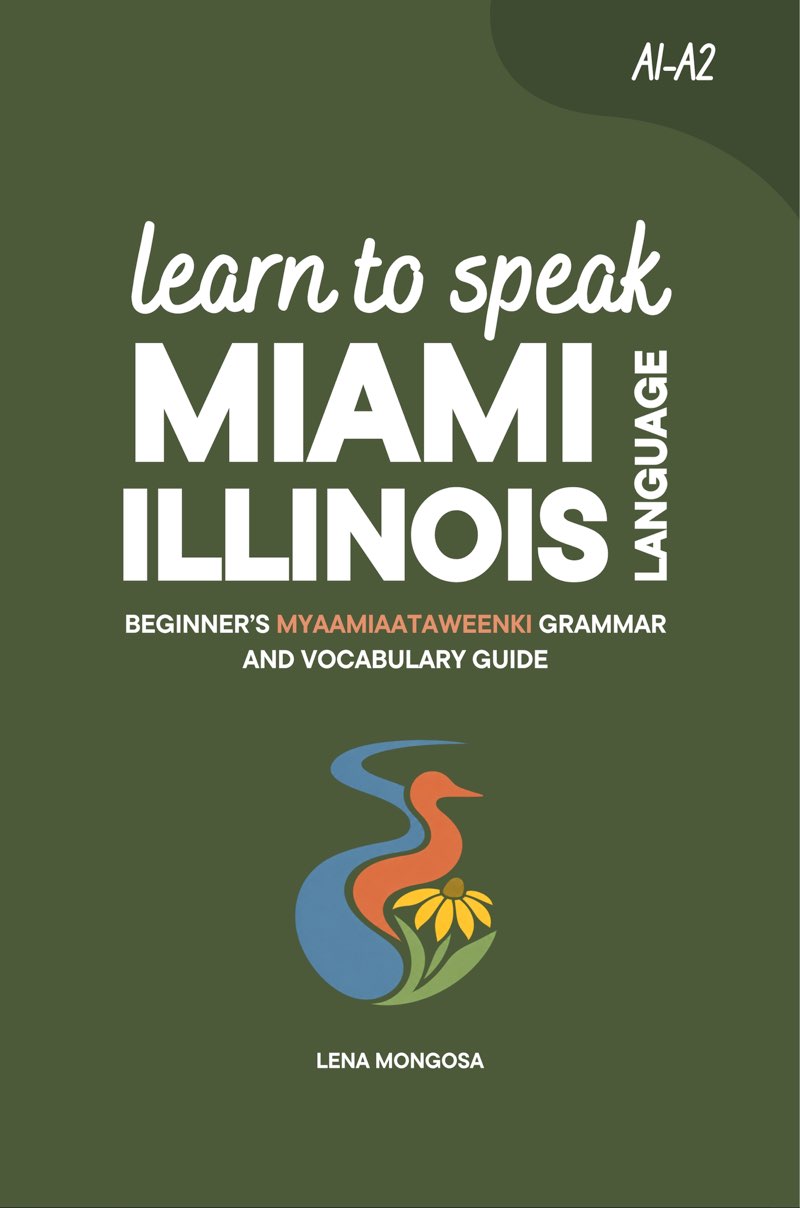
Miami-Illinois is an Algonquian language associated with several Indigenous peoples whose communities continue today. The name is a scholarly umbrella: linguist David Costa explains that it covers the closely related speech of Miami, Peoria, Wea, Piankeshaw, Kaskaskia, and other Illinois peoples. It should not replace the names communities use for themselves or their language. Miami people use Myaamiaataweenki; the Peoria Tribe teaches Peewaaliaataweenki. These community names are useful guides when choosing teaching materials. (Costa, “Dialects of Miami-Illinois”; Peoria language portal)
One linguistic umbrella, distinct communities
Costa's analysis treats these forms as dialects of one language because the historical evidence indicates mutual understanding and relatively small differences in vocabulary and pronunciation. That classification does not make the communities interchangeable. Nor does “dialect” mean an incomplete or inferior language. The term describes a relationship among varieties; community identity and the names used in teaching have their own importance. The Peoria language portal, for example, explicitly places its work within the history and future of the Peoria Tribe. (Costa, 2025; “About Peewaalia”)
The Miami Tribe of Oklahoma identifies its ancestral homelands with the Great Lakes region, including areas now within Indiana, Ohio, Illinois, Michigan, and Wisconsin. Its account describes forced removal from Indiana in 1846 to what is now Kansas, followed by another removal to Indian Territory, now Oklahoma. These disruptions belong in the language's history: the Tribe connects cultural and linguistic reclamation with the effects of dispossession and assimilation. Today it is based in Miami, northeastern Oklahoma, while its citizens live across the United States and beyond; northeastern Oklahoma, eastern Kansas, and northern Indiana remain important concentrations. (Miami Tribe, “About”)
The Peoria Tribe of Indians of Oklahoma likewise describes itself as a living sovereign community. It brings together the histories of the Kaskaskia, Peoria, Piankeshaw, and Wea, with its present homeland in Ottawa County, northeastern Oklahoma. It leads its own community language initiative. The programme offers structured courses in person and online, alongside digital resources for pronunciation, listening and speaking; its portal welcomes beginners. (“About Peewaalia”)
Reclamation begins with people
Community terminology matters especially when describing language transmission. The Myaamia language FAQ describes an interval when the language “went to sleep,” followed by renewed learning from archival documentation. Simply calling it extinct would obscure the work and use that followed. The same FAQ describes learners with different levels of proficiency; it does not supply a dated population survey from which a reliable current speaker total could be calculated. (Myaamia language FAQ)
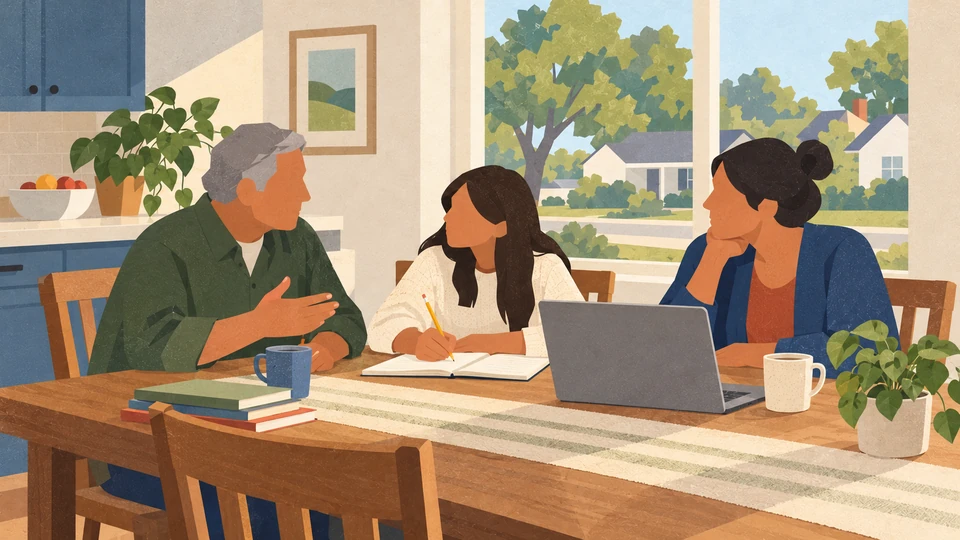
In a 2024 account republished with a September 2026 reflection, Daryl Baldwin describes how he and his wife, Karen, began learning alongside their children. Their early home vocabulary supported ordinary activities, including preparing meals and caring for the house. Collaboration with language researcher David Costa and tribal cultural leader Julie Olds helped connect those family efforts with wider community programming. Baldwin's account makes the work tangible: rebuilding language use involved study, teaching materials, household habits, and relationships. (Baldwin, “Reflecting on Myaamia Language Revitalization Efforts”)
The Myaamia Center gives that work an institutional home. The Miami Tribe describes it as a tribal initiative located at Miami University in Oxford, Ohio. Research supports community education, while university students can learn about and participate in tribal language and cultural revitalization. (Miami Tribe, “Myaamia Center”)
Turning records into usable language
Turning historical manuscripts into learning materials takes several stages of work.
- A community explanation of the process describes locating manuscripts, making digital copies, transcribing difficult handwriting, translating French-language records, and analysing vocabulary and grammar.
- Linguists, educators, and community members then consider present-day use.
The Indigenous Languages Digital Archive preserves research materials, while the online Myaamia dictionary provides a learner-facing resource. This process connects historical written entries with contemporary lessons. (“From the Archives: How We Revitalize the Myaamia Language”)
The published Miami-Peoria Dictionary offers another example. The Myaamia Center identifies Daryl Baldwin and David Costa as its authors and dates the edition's completion to spring 2005. It includes words, morphemes, verb stems, and an English finder list, drawing on documentation from the late seventeenth century into the twentieth. The project remains open to further study of the surviving documentation. (Myaamia Center, “Miami-Peoria Dictionary”)
Culture within everyday meanings
Kinship provides a specific example of what learners encounter beyond word substitution. In a 2026 teaching article, Hunter Thompson Lockwood explains that Myaamia kinship vocabulary groups a mother's sisters with one's mother and a father's brothers with one's father. Other relatives are distinguished differently from ordinary English usage. Learning those relationships involves cultural understanding as well as memorisation. (Lockwood, “Kinship Language: Terms for the 2026 Summer Programs”)
The language also has to serve contemporary life. The community FAQ notes the creation of vocabulary for computers and mobile phones and directs learners to dictionary audio and a pronunciation guide. For beginners, these community resources offer a grounded starting point: learn the system being taught, listen to the provided models, and keep track of whether material is presented as Myaamia or Peewaalia. Reclamation is happening through such present-day choices and repeated use. (Myaamia language FAQ)
Sources
- Dialects of Miami-Illinois: What’s the Difference Between the Myaamia and Peewaalia Languages? (2025-05-06). https://aacimotaatiiyankwi.org/2025/05/06/dialects-of-miami-illinois/
- About Peewaalia. https://peewaalia.com/about/
- About. https://miamination.com/about-us/
- Myaamiaataweenki ‘Miami Language’ FAQ’s. https://aacimotaatiiyankwi.org/language/miami-language-faqs/
- Reflecting on Myaamia Language Revitalization Efforts (2026-09-09). https://aacimotaatiiyankwi.org/2026/09/09/baldwin-revitalization-reflection/
- Myaamia Center. https://miamination.com/myaamia-center/
- From the Archives: How We Revitalize the Myaamia Language (2025-11-05). https://aacimotaatiiyankwi.org/2025/11/05/how-we-revitalize-the-myaamia-language/
- Miami-Peoria Dictionary. https://miamioh.edu/centers-institutes/myaamia-center/research/publications/miami-peoria-dictionary.html
- Kinship Language: Terms for the 2026 Summer Programs (2026-05-12). https://aacimotaatiiyankwi.org/2026/05/12/kinship-language/
- Language Similarities and Differences: Myaamiaataweenki and its Relatives (2026-09-29). https://aacimotaatiiyankwi.org/2026/09/29/similarities-and-differences-miami-and-relatives/