Languages & Culture
Nigerian Pidgin
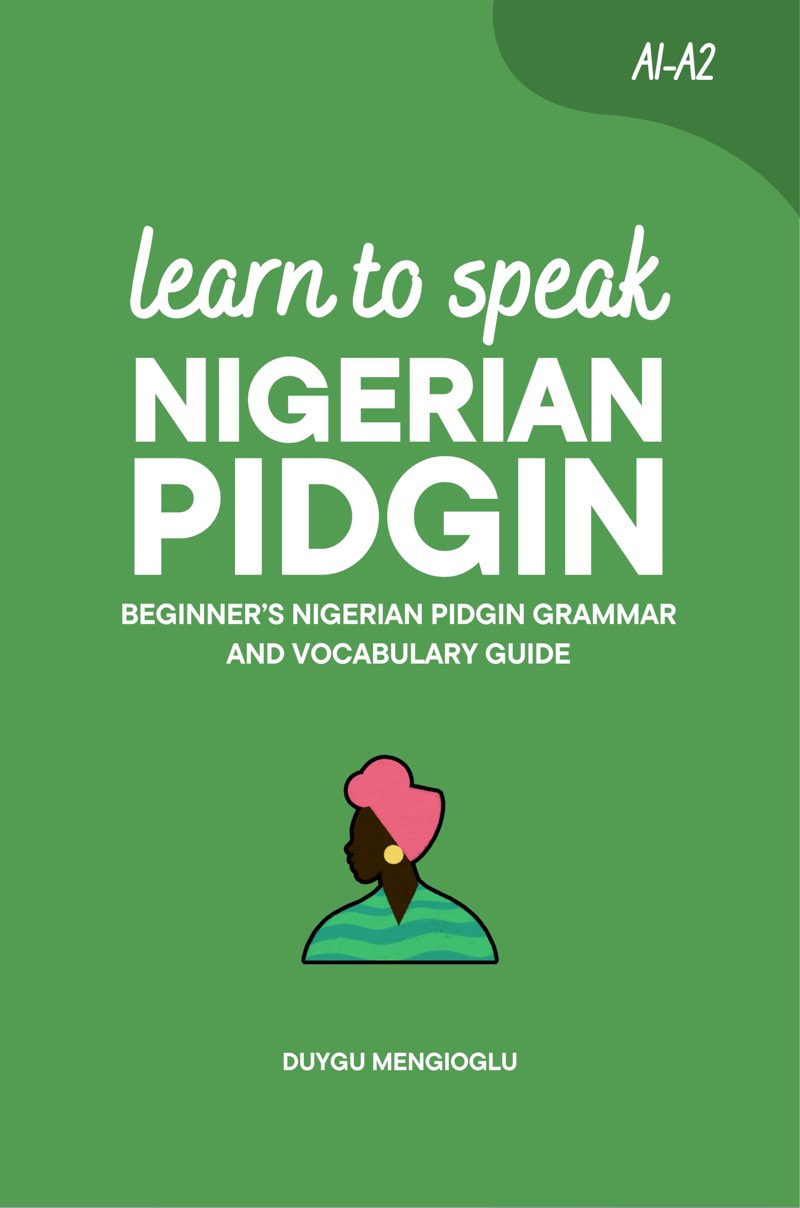
Nigerian Pidgin is an English-lexified contact language: English supplies much of its vocabulary, while its development also involves Nigeria’s Indigenous languages and its own grammatical patterns. It has first-language communities as well as people who learn it later. These different histories of acquisition help explain why descriptions use both pidgin and creole terminology. Nigerian Pidgin is also studied as a language distinct from Nigerian English.
Connected histories, varied communities
The linguist Nicholas Faraclas places its emergence within centuries of coastal contact and Atlantic mobility. Portuguese contact began in the fifteenth century; later connections involved European, African and African-descended travellers and communities. His account cautions against assigning the language’s emergence to a single cause or population. It belongs within a closely related West African English-lexified group that includes Ghanaian Pidgin English, Cameroon Pidgin English and Sierra Leone Krio. Those neighbouring varieties have their own settings and histories; this article concerns Nigeria.
Warri and Sapele are established centres of first-language use. Nigerian Pidgin also circulates across southern Nigeria and urban communities elsewhere in the country, and among Nigerians abroad. People encounter it through workplaces, markets, schools and universities. For some, it is a principal language of daily life; others use it within particular relationships or activities. Such differences matter when interpreting descriptions of how Nigerians speak.
Choosing how to write
A 2009 conference supported the name Naijá and led to the Naijá Langwej Akedemi. In their writing guide, Christine I. Ofulue and David O. Esizimetor explain that the name affirms the language’s identity and recognises its expanded functions, including its development as a creole in some communities. Their orthographic proposal seeks consistency, reduced ambiguity and ease of use. It draws on features shared across varieties, with uses ranging from personal correspondence to poems and linguistic research.
A proposal does not establish universal practice. In a 2024 study, Pin-Jie Lin and colleagues describe continuing spelling variation despite standardisation initiatives. They examine written religious material and transcribed conversations, then test ways to help language technology accommodate alternative spellings. Adding spelling variants to training material improved results in their translation and sentiment-analysis experiments. This finding has a practical implication: software can be designed to handle variation that readers and writers already encounter. The experiments do not establish an officially accepted spelling system.
Language on stage
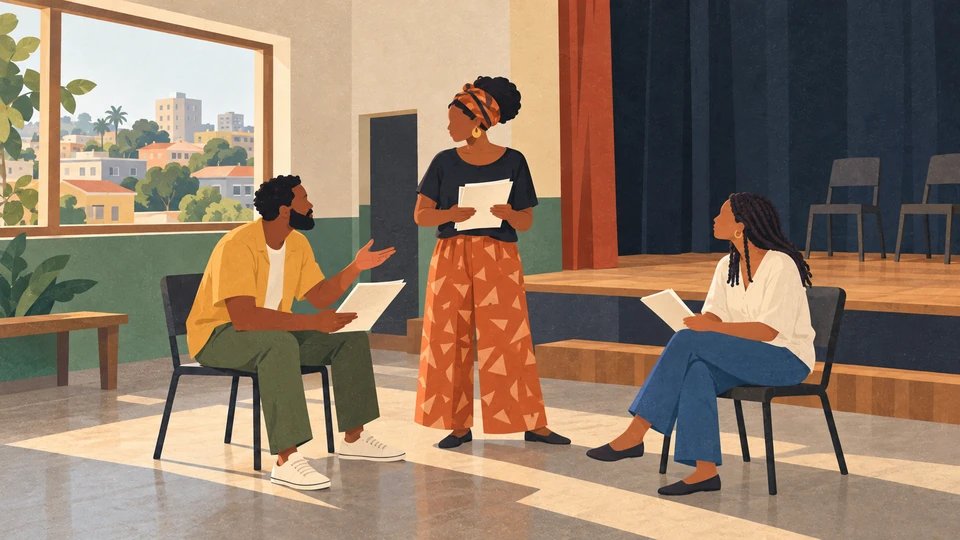
IFRA-Nigeria’s report of a Naija symposium at the University of Ibadan records a theatrical contribution to the gathering. On 27 June 2019, Rukewe & Julie, described as Ogini Bernard’s Naija version of Romeo and Juliet, was staged at the university’s Wole Soyinka Theatre. The symposium also brought researchers together to discuss spoken-language variation and corpus annotation. This documented occasion places literary adaptation and performance alongside the detailed study of everyday speech. It is one specific example of language work in Ibadan, with its own participants, venue and purpose.
Studying conversation closely
The NaijaSynCor project brought Nigerian scholars F. Egbokhare and C. Ofulue together with research teams in France to examine variation in speech. Its published project record covers 2017–2021. A pilot corpus used recordings made around Ibadan by Bukola Babalola and Opeyemi Lewis; other collaborators transcribed, translated and annotated the material. Annotation records grammatical information alongside the words, allowing researchers to investigate patterns across utterances.
A 2018 paper by Marine Courtin, Bernard Caron, Kim Gerdes and Sylvain Kahane describes this work’s educational dimension. Annotators who spoke the language reported noticing grammatical regularities that had previously passed unremarked in everyday conversation. The researchers also identified differences from English while acknowledging that comparisons between spoken and written materials can affect results. Careful documentation thus includes attention to who is speaking, the kind of material recorded and the analytical choices made when representing it.
Sources
- Nicholas Faraclas; Atlas of Pidgin and Creole Language Structures Online. Survey chapter: Nigerian Pidgin. https://apics-online.info/surveys/17
- Christine I. Ofulue and David O. Esizimetor; Naijá Langwej Akedemi guide hosted by IFRA-Nigeria. GUIDE TO STANDARD NAIJÁ ORTHOGRAPHY. An NLA Harmonized Writing System for Common Naijá Publications. https://www.ifra-nigeria.org/research/former-projects/89-guide-to-standard-naija-orthography-an-nla-harmonized-writing-system-for-common-naija-publications
- IFRA-Nigeria; NaijaSynCor project, principal investigator Bernard Caron. NaijaSynCor: A Corpus-based Macro-Syntactic Study of Naija (Nigerian Pidgin). https://www.ifra-nigeria.org/research/former-projects/183-naijasyncor-a-corpus-based-macro-syntactic-study-of-naija-nigerian-pidgin
- IFRA-Nigeria; NaijaSynCor project. NaijaSynCor project: release of a pilot syntactic corpus of Naija. https://www.ifra-nigeria.org/research/former-projects/245-naijasyncor-project-release-of-a-pilot-syntactic-corpus-of-naija
- Marine Courtin, Bernard Caron, Kim Gerdes and Sylvain Kahane; Proceedings of the Workshop on Annotation in Digital Humanities, CEUR Workshop Proceedings 2155, pp. 7–11. Establishing a Language by Annotating a Corpus: the Case of Naija, a Post-creole Spoken in Nigeria. https://ceur-ws.org/Vol-2155/courtin.pdf
- Pin-Jie Lin, Merel Scholman, Muhammed Saeed and Vera Demberg; LREC-COLING 2024, pp. 11510–11522. Modeling Orthographic Variation Improves NLP Performance for Nigerian Pidgin. https://aclanthology.org/2024.lrec-main.1006.pdf
- IFRA-Nigeria; no individual byline displayed. Report - Symposium on Naija, Institute of African Studies (UI) June 27-29, 2019. https://www.ifra-nigeria.org/events-news/conferences/324-report-symposium-on-naija-institute-of-african-studies-ui-june-27-29-2019