Languages & Culture
Papiamento

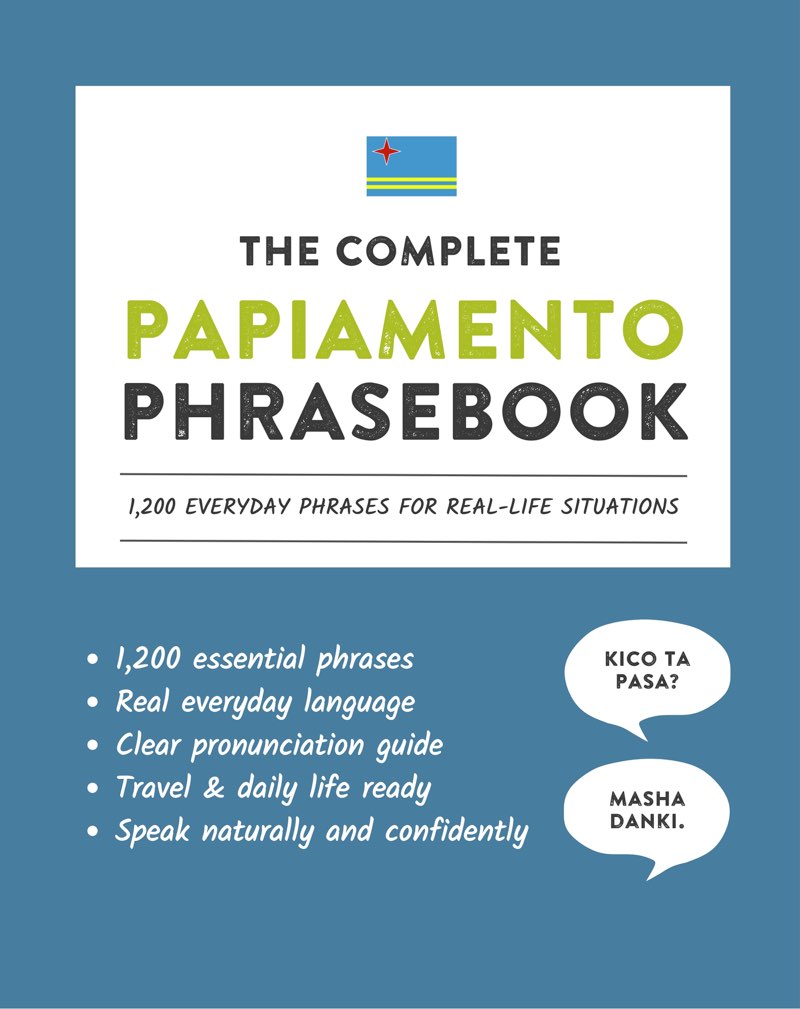
The name Papiamento is associated with Aruba; Papiamentu is used on Bonaire and Curaçao. Together these names refer to a creole language shared across the three southern Caribbean islands, with speakers also in the Netherlands. An account of the language needs to recognise the islands' connections alongside their distinct writing traditions and institutions.
A history across the Atlantic
In his survey for the Atlas of Pidgin and Creole Language Structures, Philippe Maurer places the language's formation in seventeenth-century Curaçao. That setting involved Dutch colonial rule, enslavement and contact among African and European languages. He describes its principal lexical background as Ibero-Romance, with substantial Dutch influence, while explaining why the precise Portuguese and Spanish contributions remain a scholarly question.
Maurer favours a formation involving several sources: Portuguese-based contact languages spoken by Africans, Portuguese used by soldiers and sailors, and Portuguese and Spanish used by Sephardic communities. His discussion compares this with other hypotheses. Attributing the account matters: the evidence does not reduce to one undisputed origin story, and resemblance between words can sometimes allow more than one historical explanation.
Writing for different island communities
The two spelling traditions deserve attention when choosing reading material. Aruba's convention gives more weight to word origins, while Curaçao and Bonaire use a more sound-based convention. Researchers studying children's literacy created parallel versions of their tasks for these traditions. For a learner, identifying a book's island context helps explain spelling differences without assuming that one version is simply an error.
Institutional recognition also has a geography. In January 2024, the Netherlands government announced recognition on Bonaire under Part III of the European Charter for Regional or Minority Languages. Its account credits input from Bonaire's public administration and identifies protection and promotion across public domains as the purpose. This was a specific territorial development, with its own legal framework.
A separate announcement reported Part II recognition in the European Netherlands from July 2024. The report connects language support with speakers on the islands and in the diaspora, and records participation by Fundashion Akademia Papiamentu. Reading the two announcements together shows why a general statement about recognition should identify which territory and arrangement it concerns.
Studying reading across languages
A study published online in 2024 by Melissa van der Elst-Koeiman and colleagues followed reading comprehension in Papiamento and Dutch from grades four to six in schools across all three islands. The children studied improved in both languages and scored higher in Papiamento comprehension. Researchers also found connections between development in the two languages. These findings concern the participating pupils: pandemic-related attrition and limited information about detailed classroom practice constrain the conclusions.
Stories for children and adults
The language's reading life also depends on making material available. In June 2025, Aruba's Department of Education announced new digital children's books in Papiamento. The government's description mentions Compa Nanzi among the stories' subjects and material for children from kindergarten through age ten. It directs readers to the department's educational websites and identifies a connection with translated Storyweaver material.
This is a concrete example of work beyond teaching a list of words. A story gives readers characters, situations and connected language to follow. The announcement presents digital publishing as a way to put Papiamento reading within reach of children at different stages, bringing local-language materials into a format families and educators can share.
Reading initiatives also address older generations. An October 2026 government account of Aruba's National Library lists books in Papiamento alongside Dutch, English, Spanish and French. It encourages shared reading and discussion of a book's themes, style and author. These activities place Papiamento within a multilingual cultural setting while giving readers reasons to return to it for enjoyment, conversation and sustained attention to a writer's choices.
Sources
- Philippe Maurer; APiCS Online. Survey chapter: Papiamentu. https://apics-online.info/surveys/47
- Melissa van der Elst-Koeiman, Eliane Segers, Ronald Severing and Ludo Verhoeven; Bilingualism: Language and Cognition. Predicting Papiamento and Dutch reading comprehension development in a post-colonial context. https://www.cambridge.org/core/journals/bilingualism-language-and-cognition/article/predicting-papiamento-and-dutch-reading-comprehension-development-in-a-postcolonial-context/18C7C5967A18CF1E9FC6A50EB2C6DEFF
- Government of the Netherlands. Papiamento on Bonaire now officially recognised under the European Charter for Regional and Minority Languages (2024-01-29). https://www.government.nl/latest/news/2024/01/29/papiamento-on-bonaire-now-officially-recognised-under-the-european-charter-for-regional-and-minority-languages
- Rijksdienst Caribisch Nederland. Papiamentu in the Netherlands recognised under Charter (2024-07-04). https://english.rijksdienstcn.com/latest/news/2024/july/4/papiamentu-in-the-netherlands-recognised-under-charter
- Government of Aruba; Language Section, Aruba Department of Education. 22 new digital books in Papiamento. (2025-06-04). https://www.gobierno.aw/en/22-new-digital-books-in-papiamento
- Government of Aruba; account of the National Library of Aruba. Older Adults and the Importance of Reading (2026-10-01). https://www.gobierno.aw/en/older-adults-and-the-importance-of-reading