Languages & Culture
Plains Cree
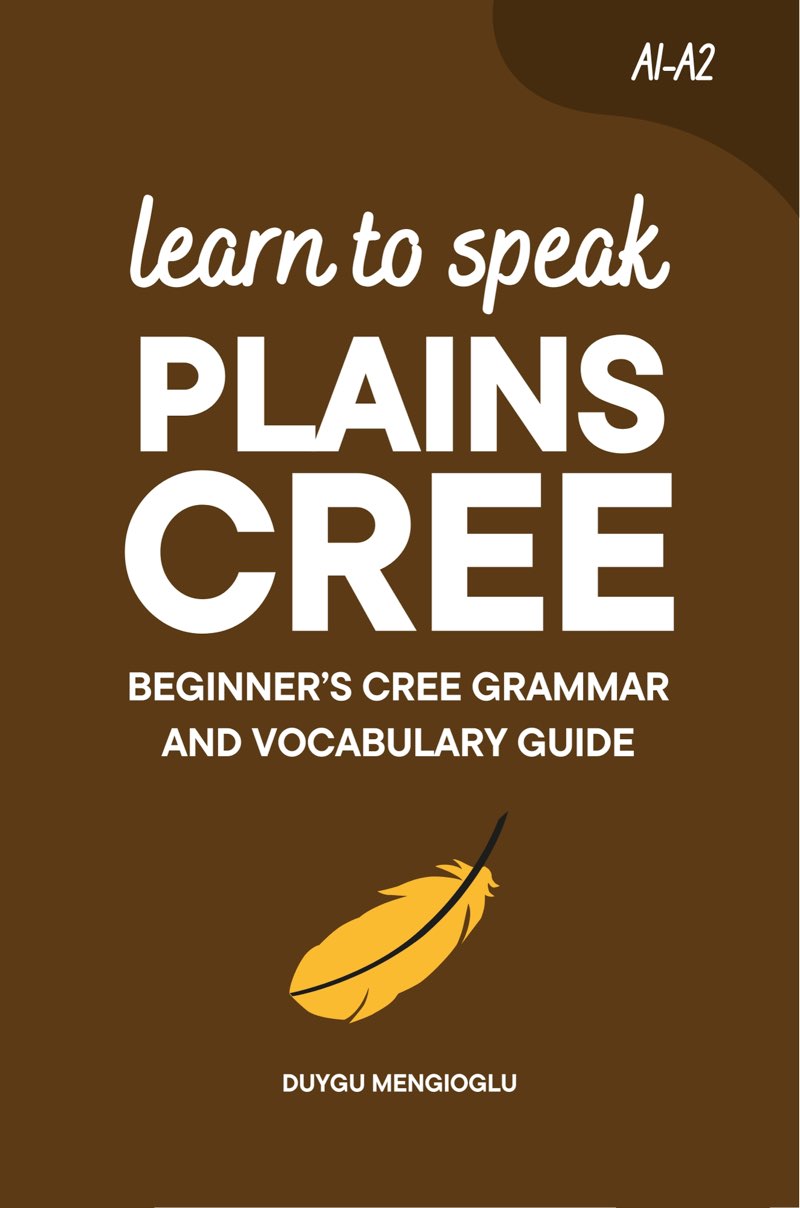
Plains Cree belongs to the Algonquian family and forms part of the wider Cree–Innu–Naskapi language continuum. First Nations University of Canada places it within that continuum in its account of collaborative dictionary and atlas work. The broader relationship helps explain the name, but a learner still needs to know which community’s speech a resource represents.
Place matters when choosing a resource
Saskatchewan’s Cree curriculum identifies Plains Cree with the y variety, alongside Woodland and Swampy varieties associated with other sound correspondences. It names Plains Cree communities including Muskeg Lake, Beardy’s, Thunderchild and Onion Lake. These are useful geographic anchors, not a claim that everyone within a broad region speaks identically. The curriculum itself recognises variation within Plains Cree.
Community-led education in Maskwacîs, Alberta, provides another important setting. The Maskwacîs Education Schools Commission describes a locally developed kindergarten-to-Grade-9 curriculum endorsed through staff, Elder and community processes. Its account also distinguishes the completed curriculum from staged classroom field testing. That distinction matters: designing resources, introducing them and sustaining everyday use are different parts of language education.
Writing is a history of collaboration
In their 2008 spelling manual, Jean Okimāsis and Arok Wolvengrey describe a 1973 Edmonton meeting where Elders, language instructors and linguists discussed Standard Roman Orthography, usually abbreviated SRO. Their account makes spelling development a collaborative educational history, involving decisions about how to represent Cree clearly in print.
The manual explains that SRO uses Roman letters according to Cree conventions; reading those letters as though they were English can mislead a beginner. It also explicitly recognises syllabics and SRO as valid writing systems. A learner therefore benefits from knowing a teacher’s chosen system and following its conventions carefully. Familiar-looking letters do not make attentive listening unnecessary.
A dictionary can reveal how words are built
The online itwêwina dictionary brings several strands of scholarship together. Alberta Language Technology Lab’s description explains that its computational model allows searches using inflected Plains Cree forms and displays related word forms. This helps connect the form someone encounters with the vocabulary a dictionary organises. The project combines existing dictionaries with computational research; it is more than a list of one-word English equivalents.
Its homepage accepts Cree searches in SRO or syllabics and credits the university lab, First Nations University and the Maskwacîs Education Schools Commission. It also makes an important distinction in its audio credits. Recorded words come from speakers in Maskwacîs and Moswacîhk, while synthesised forms draw on recordings of a speaker from Maskêko-sâkahikanihk. Recorded speech and generated audio have different origins, even when offered within one learning resource.
Learning can travel between school and home
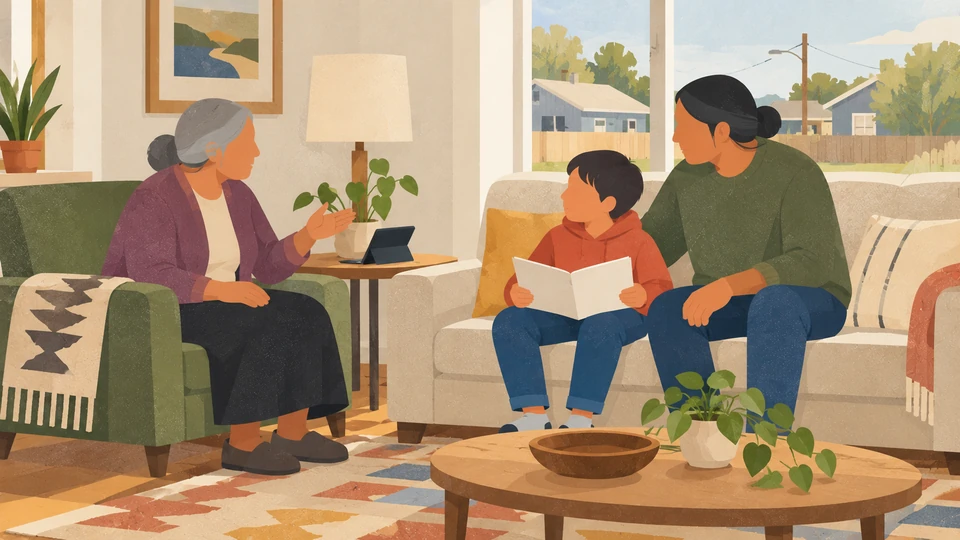
The commission’s 2025 annual report describes learning kits intended for parents or guardians and children to use together at home. The stated aim is to connect school learning with family participation. This gives language education an everyday setting: adults can be learners alongside children, with materials supporting a shared activity. The report documents provision and purpose; it does not, by itself, establish how much proficiency each household gained.
Storytelling offers another documented approach. At Concordia University in winter 2024, Manon Tremblay, a Plains Cree educator from Muskeg Lake Cree Nation, taught an informal lunchtime workshop through stories and discussion. A university report describes students, staff and faculty learning together, with participants welcome to eat during sessions. Tremblay connected language with history and described humour as part of her storytelling practice. These details show a particular teacher shaping a social learning environment, rather than a universal formula for teaching Cree.
Taken together, these resources suggest practical questions for a learner: whose speech is being represented, which spelling conventions are used, and how can the material support interaction with teachers and other learners? A dictionary, a booklet and a story each make different aspects of Plains Cree available. Their value is clearest when the people and local knowledge behind them remain visible.
Sources
- First Nations University of Canada. Algonquian Atlas and Dictionaries Project. https://www.fnuniv.ca/academic/research-office/current-ongoing-research-projects/algonquian-atlas-and-dictionaries-project/
- Saskatchewan Ministry of Education. nēhiyawēwin 10, 20, 30 — Nature of nehiyaw Language. https://curriculum.gov.sk.ca/CurriculumDocument?id=2§ion=3186
- Jean Okimāsis and Arok Wolvengrey; miywāsin ink. How to Spell it in Cree (The Standard Roman Orthography) (2008). https://creeliteracy.org/wp-content/uploads/2016/01/htsiic-covers-nocontacts.pdf
- Alberta Language Technology Lab, in collaboration with First Nations University and Maskwacîs Education Schools Commission. itwêwina Plains Cree dictionary. https://itwewina.altlab.app/
- Alberta Language Technology Lab, University of Alberta. itwêwina: Plains Cree Dictionary. https://altlab.ualberta.ca/itwewina/
- Maskwacîs Education Schools Commission. Maskwacis Education Schools Commission Annual Report 2025. https://www.maskwacised.ca/download/555529
- Johanne Cadorette; Concordia University. Concordia offers a non-credit workshop on Cree language and culture (2024-06-18). https://www.concordia.ca/cunews/main/stories/2024/06/18/concordia-offers-a-non-credit-workshop-on-cree-language-and-culture.html
- Maskwacîs Education Schools Commission. Curriculum and Instruction. https://www.maskwacised.ca/ls/curriculum-and-instruction